What to Do If You Find a Baby Kitten?
~ by Rachel Seagrave
First, look to see if the mom is nearby. If you find a kitten out in the open—such as a flower bed, or lying on the pavement or grass, it usually means the mom has dropped it. If there is any chance of getting the kitten back to its mom, TRY.
Next and most importantly, when you find an orphaned kitten DO NOT ATTEMPT TO FEED IT! Kittens cannot generate heat and so can become chilled quickly. Feeding a kitten in a chilled state will almost always end in disaster. You first need to make sure the kitten is warm before you do anything else.
You can do this by simply putting the kitten under your shirt and against your chest to help transfer body heat. I like to place a heating pad (set on low) over the kitten while I hold the kitten to me and gradually warm it. You can also fill a plastic soda bottle up with very hot water, wrap once in a small towel, and set the baby kitten next to it in a small covered box. Make sure the box is ventilated for air, though. A warm water bottle or a heating pad set to low will work, as well. But simply placing a kitten in a box with a blanket will not help. The kitten needs an outside heat source because, again, a very young kitten is unable to generate heat.
Once the kitten starts to respond and warm up, use a dropper to place a small amount of corn syrup just inside the lips of the kitten next to its gums. This will give the little baby some much needed energy! You can also put tiny drops of warm sugar water in the kitten’s mouth, making sure to only do a drop or two at a time as the kitten may not be strong enough to swallow. You should see the kitten gradually gain some strength with warmth and the energy from the sugar. I have seen corn syrup work miracles!
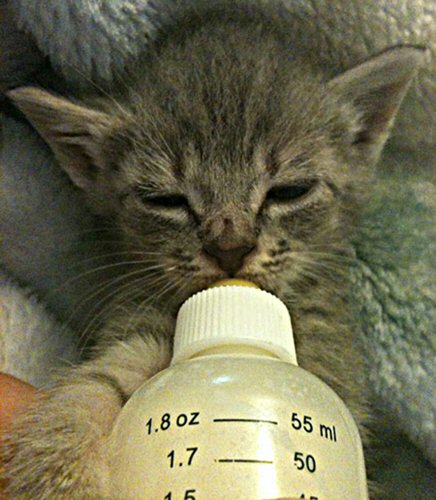
If you decide to try and bottle feed the kitten yourself, make sure you purchase a milk replacer specifically for kittens. Do not feed the kitten cow’s milk or “Kitten Milk” sold in the food section. It needs to be actual milk replacer or formula for kittens.
There is much more to saving a bottle kitten; these are just a few of the early steps to take to give the kitten a fighting chance. Call the Rutherford County Humane Society for more advice and guidance. We are happy to help you with any orphaned kitten!