Similar Posts

  • The Joys of Fostering

    ~ By Jo Anne Benware Fostering dogs has been a joy for my husband and me – and for our dog Kirby! We have three cats who refuse to play with Kirby, although they’re gracious enough to tolerate him. So Kirby gets his fun and socializing from the parade of dogs and puppies that come in and out of our lives. Many of these dogs are strays who were starving – let go by their families to fend for themselves. With no real reason to hope that humans would be kind to them again, but still forever hopeful that someone…perhaps a boy or girl who needs a best friend…will give them their forever home. As much as I would love to adopt each and every…

  • TNR Rutherford County

    What is TNR? TNR stands for Trap-Neuter-Return.  (sometimes Trap-Neuter-Return-Vaccinate or Trap-Neuter-Release). TNR is a humane, non-lethal method of managing feral and free-roaming cat populations. TNR reduces the need for shelter euthanasia because it lowers the number of cats and kittens entering the shelter system. TNR of Rutherford County, NC is a local group of compassionate volunteers in Rutherford County who humanely capture unwanted cats in the community to be spayed/neutered and vaccinated. In conjunction with animal control and other established community programs, TNR of Rutherford County, NC volunteers return the spayed/neutered and vaccinated cats to their original outdoor locations, which helps stabilize feral cat populations and stop the breeding cycle. TNR of Rutherford County, NC is dedicated to working within communities by educating and empowering…

  • Dog Heatstroke Survival Guide

    Know how to treat and prevent this dangerous condition. ~ Robert Newman What is heatstroke? In simple terms, heatstroke occurs when a dog loses its natural ability to regulate its body temperature. Dogs don’t sweat all over their bodies the way humans do. Canine body temperature is primarily regulated through respiration (i.e., panting). If a dog’s respiratory tract cannot evacuate heat quickly enough, heatstroke can occur. To know whether or not your dog is suffering from heatstroke (as opposed to merely heat exposure), it’s important to know the signs of heatstroke. A dog’s normal resting temperature is about 100.5 to 102.5 degrees Fahrenheit. Once a dog’s temperature rises above 105 degrees, physiological changes start to take place, and the dog begins to experience the effects…

  • What to Do If You Find a Baby Kitten?

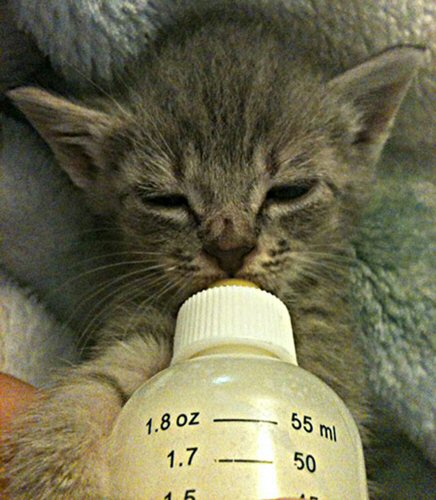
    ~ by Rachel Seagrave First, look to see if the mom is nearby.  If you find a kitten out in the open—such as a flower bed, or lying on the pavement or grass, it usually means the mom has dropped it. If there is any chance of getting the kitten back to its mom, TRY. Next and most importantly, when you find an orphaned kitten DO NOT ATTEMPT TO FEED IT! Kittens cannot generate heat and so can become chilled quickly. Feeding a kitten in a chilled state will almost always end in disaster.  You first need to make sure the kitten is warm before you do anything else. You can do this by simply putting the kitten under your shirt and against your chest…

  • Polydactyl What?!

    ~ by Rachel Seagrave Have you ever seen a kitten or cat with more toes than you think it should have? If you have, you were probably looking at a Polydactyl cat! Polydactyl simply means that one has more digits than the normal number of five on each paw. Most Polydactyl’s have one or two extra toes. The extra toes can make it appear that the cat has a thumb or is wearing mittens.  While not a trait of a particular breed, Polydactyl’s come in all types and colors, and is genetically inherited. Polydactyl cats have many nicknames such as Mittens, Snowshoes, or Thumbs, but my favorite name—and what I personally call them—are Hemingway Cats, named for the famous author who made his home in…

  • Can You Pass The Chained Dog Test?

    Most humans probably can’t. But many dogs in Rutherford County pass this test every day. All day and night, in fact. Granted, once someone has tied them up with a rope or chain, they have no choice in the matter. Let’s see how well we humans can do. It’s “easy.” Simply put a collar around your neck with a rope or chain tied to it, then take the other end of the rope or chain and tie it somewhere sturdy. So that you can’t get loose. Now, see how long you can stand it. For an extra fair test, make sure you keep yourself tied up in all sorts of weather, just like dogs do. Try this out in hundred degree temperatures with gnats and…