
Similar Posts

  • My Dogs Will NEVER Accept a Cat…or Will They?

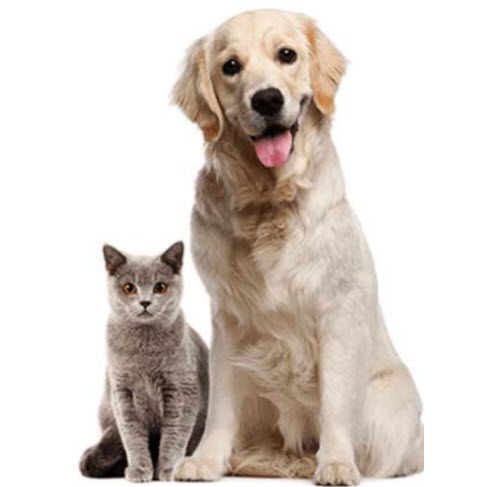
    ~ By Stephanie Janard It was official: I had fallen in love with the stray orange and white cat that barged into our yard one day and insisted on living with us. I set up a comfy space for “Skipper” on the back porch, where I let him in every night so he’d have a safe place to sleep. I even kept the porch light on for him. And in the daytime, I gave him plenty of attention and love wherever he was hanging out outside. But letting him inside was a different matter. In fact, I had decided he would need to be an outside cat.  I was simply terrified my two dogs would tear him to pieces. They sure gave every indication of…

  • Pet Tips

    ~ From Sissi Neace, former Rutherford County Humane Society President & Animal Behaviorist “My dog likes to ride in the back of my pick up truck. Is that safe?” Absolutely not. The back of a truck is one of the most dangerous places for your dog!I have personally seen a dog fly out of a truck bed after the truck hit a bump. The driver kept going and the poor dog landed in the road. The dog was lucky that there were no cars behind the truck. So, he limped away with a broken leg and jaw instead of being run over. On the same note, dogs like to put their heads out the car window. I do not recommend this, either, unless your dog…

  • What to Do If You Find a Baby Kitten?

    ~ by Rachel Seagrave First, look to see if the mom is nearby.  If you find a kitten out in the open—such as a flower bed, or lying on the pavement or grass, it usually means the mom has dropped it. If there is any chance of getting the kitten back to its mom, TRY. Next and most importantly, when you find an orphaned kitten DO NOT ATTEMPT TO FEED IT! Kittens cannot generate heat and so can become chilled quickly. Feeding a kitten in a chilled state will almost always end in disaster.  You first need to make sure the kitten is warm before you do anything else. You can do this by simply putting the kitten under your shirt and against your chest…

  • A Stray Dog’s Prayer

    Dear God, please send me somebody who’ll care! I’m tired of running, I’m sick with despair. My body is aching; it’s so racked with pain, and dear God I pray, as I run in the rain. That someone will love me and give me a home, a warm cozy bed and a big juicy bone. My last owner tied me all day in the yard sometimes with no water, and God that was hard. So I chewed my leash, and I ran away. To rummage in garbage and live as a stray. But now God, I’m red and hungry and cold, and I’m so afraid that I’ll never grow old. They’ve chased me with sticks and hit me with stones, while I run the streets…

  • Can You Pass The Chained Dog Test?

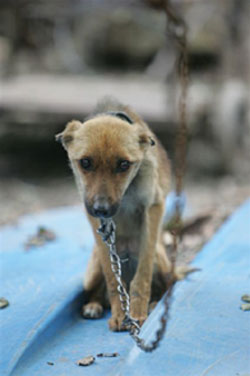
    Most humans probably can’t. But many dogs in Rutherford County pass this test every day. All day and night, in fact. Granted, once someone has tied them up with a rope or chain, they have no choice in the matter. Let’s see how well we humans can do. It’s “easy.” Simply put a collar around your neck with a rope or chain tied to it, then take the other end of the rope or chain and tie it somewhere sturdy. So that you can’t get loose. Now, see how long you can stand it. For an extra fair test, make sure you keep yourself tied up in all sorts of weather, just like dogs do. Try this out in hundred degree temperatures with gnats and…

  • Dog Heatstroke Survival Guide

    Know how to treat and prevent this dangerous condition. ~ Robert Newman What is heatstroke? In simple terms, heatstroke occurs when a dog loses its natural ability to regulate its body temperature. Dogs don’t sweat all over their bodies the way humans do. Canine body temperature is primarily regulated through respiration (i.e., panting). If a dog’s respiratory tract cannot evacuate heat quickly enough, heatstroke can occur. To know whether or not your dog is suffering from heatstroke (as opposed to merely heat exposure), it’s important to know the signs of heatstroke. A dog’s normal resting temperature is about 100.5 to 102.5 degrees Fahrenheit. Once a dog’s temperature rises above 105 degrees, physiological changes start to take place, and the dog begins to experience the effects…